
Use another person’s experience to find your questions. Your own goals, health and hair still need their own conversation.
Jeff’s story starts with questions.
Jeff Thomas has spoken with Advanced about hair restoration. His earlier Q102 conversation is part of the practice’s archive.
What do you hope will change? What would you want to know before deciding? Use another person’s story to find your questions, not to predict your result.
Explore Jeff’s historical hair conversation ↗
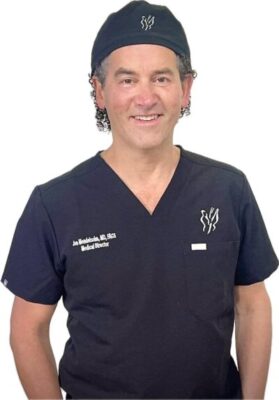
The conversation has a cast.
The journey participant: lived experience and personal questions. His account is not a treatment recommendation for someone else.
The physician perspective: clinical context, decision-making and discussion of risks and limitations.
The animated guide: approachable explanations and memorable questions. Felix is a fictional character, not a clinician.
Follow the questions behind a decision.
A useful story can go beyond a before-and-after image. Start with the questions behind the decision, including what felt uncertain or difficult to ask.
- Before deciding: What mattered most? Which alternatives were discussed? What remained uncertain?
- Making the plan: How were expectations, donor supply, risks and follow-up explained?
- During recovery: What practical adjustments were needed? Which questions went back to the clinical team?
- Looking back: What did the person learn, and what would they want someone else to ask?
A candid discussion can include hesitation or disappointment as well as satisfaction. It is useful to hear what mattered to that person, then consider what matters to you.
A before-and-after deserves the whole story.
Look for matching angles and lighting, a clear time interval, and which procedures or other treatments were used. Hair length, styling and image selection can change the impression.
A genuine photograph is still one person’s result. It cannot tell you whether you are a candidate or how your own hair will respond.
Four useful questions
- When were both photographs taken?
- What treatment happened between them?
- Are the angle, lighting and styling comparable?
- What would a realistic range of outcomes look like for me?
What would you ask next?
After reading or watching a patient story, pause and ask yourself what you understand better and what you would still want to discuss. Perhaps the concern is recovery, the time commitment, cost or how to decide whether a result would be enough for you.
Write down those questions in your own words. You do not have to choose a procedure because someone else did, and you do not have to want the same result.
The earlier conversation is a place to begin. For your own next step, start with an assessment of the change you are seeing and learn the choices.
Hear Jeff before the procedure.
A 2018 conversation about his experience and upcoming SmartGraft procedure. This is pre-procedure archive footage, not a new interview or a later result.
Enter the film room →Sources and further reading.
These sources offer further reading. This is not a systematic evidence review, a practice protocol or a complete list of risks.
Bring your questions to the team. This opens the scheduler linked from 351face’s hair page.